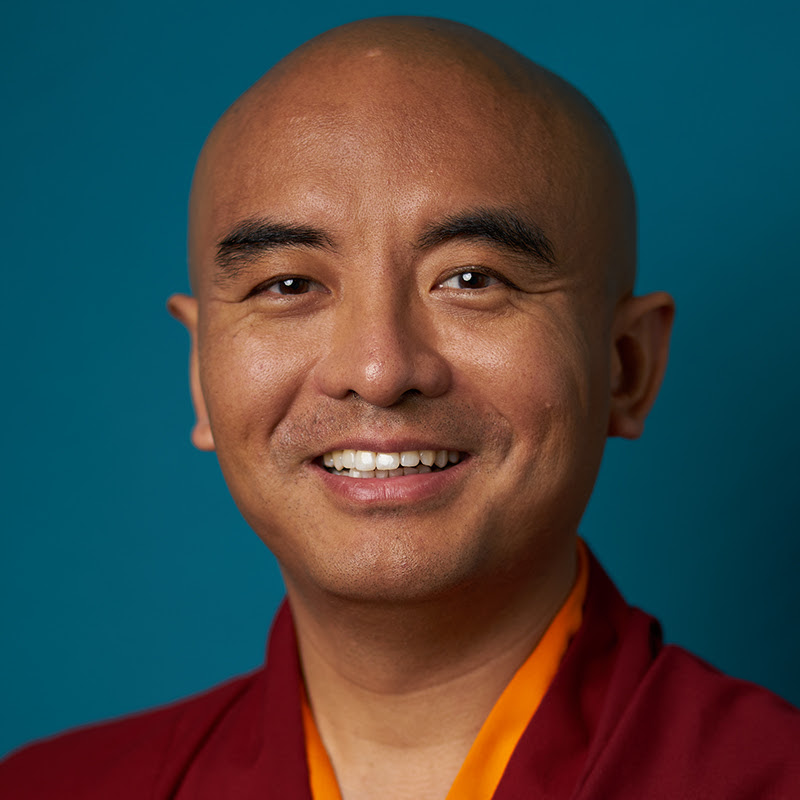
Yongey Mingyur Rinpoche
Inducted in 2026
Why it is in the collection
Some teachers make hard things look simple by simplifying them; others manage it because they have found the exact image. Mingyur Rinpoche belongs to the second group. The waterfall, the monkey, the idea that resisting distraction feeds it: these are short formulations that carry a complete instruction, and that a practitioner can recall while sitting alone with no one there to explain anything.
It is in the collection for that clarity and for the generosity with which it is made available. Much of the channel consists of answers to questions from actual practitioners, with their practical doubts and their unheroic obstacles — consistency, community, the fear of dying — and that willingness to attend to small things is an unspectacular form of service.
We are persuaded, too, by his temperament. He teaches from an ancient contemplative tradition without demanding that it be embraced, and he speaks of suffering and death with a humour that trivialises nothing: it lightens the listener without lessening the subject. That combination of depth and lightness is rare, and it is exactly what we look for when someone teaches the work of looking inward.
About this channel
Yongey Mingyur Rinpoche is a Tibetan Buddhist meditation teacher, known for presenting the ancient wisdom of Tibet in a fresh and engaging way, and for a playful humour that has endeared him to students around the world. His first book, The Joy of Living, entered the New York Times bestseller list and has been translated into more than twenty languages. When he is not attending to the monasteries under his care in India and Nepal, he spends part of each year travelling and teaching.
The channel gathers two kinds of material. There are the teachings proper, which take up the workings of the mind as a practitioner meets them: the waterfall experience, that moment when a beginner discovers how much noise was already there; the monkey mind and the epidemic of distraction; why fighting distraction only strengthens it; whether distraction itself can become meditation; the three types of awareness. There are also extended retreat sessions on mahamudra, given over several days alongside Tai Situ Rinpoche.
The second strand is the question-and-answer series, in which Rinpoche addresses very concrete difficulties raised by practitioners: how to build a consistent practice, how to be generous without attachment, how to find belonging in a community, what happens when we die. The tone stays conversational and light even on the gravest subjects, and the images he uses ( the waterfall, the monkey, making friends with your own mind rather than fighting it ) are working tools rather than decoration. Viewers will find practical instruction that can be applied from the first day, offered without requiring prior doctrinal commitment and without concealing that a centuries-old contemplative tradition stands behind it.