
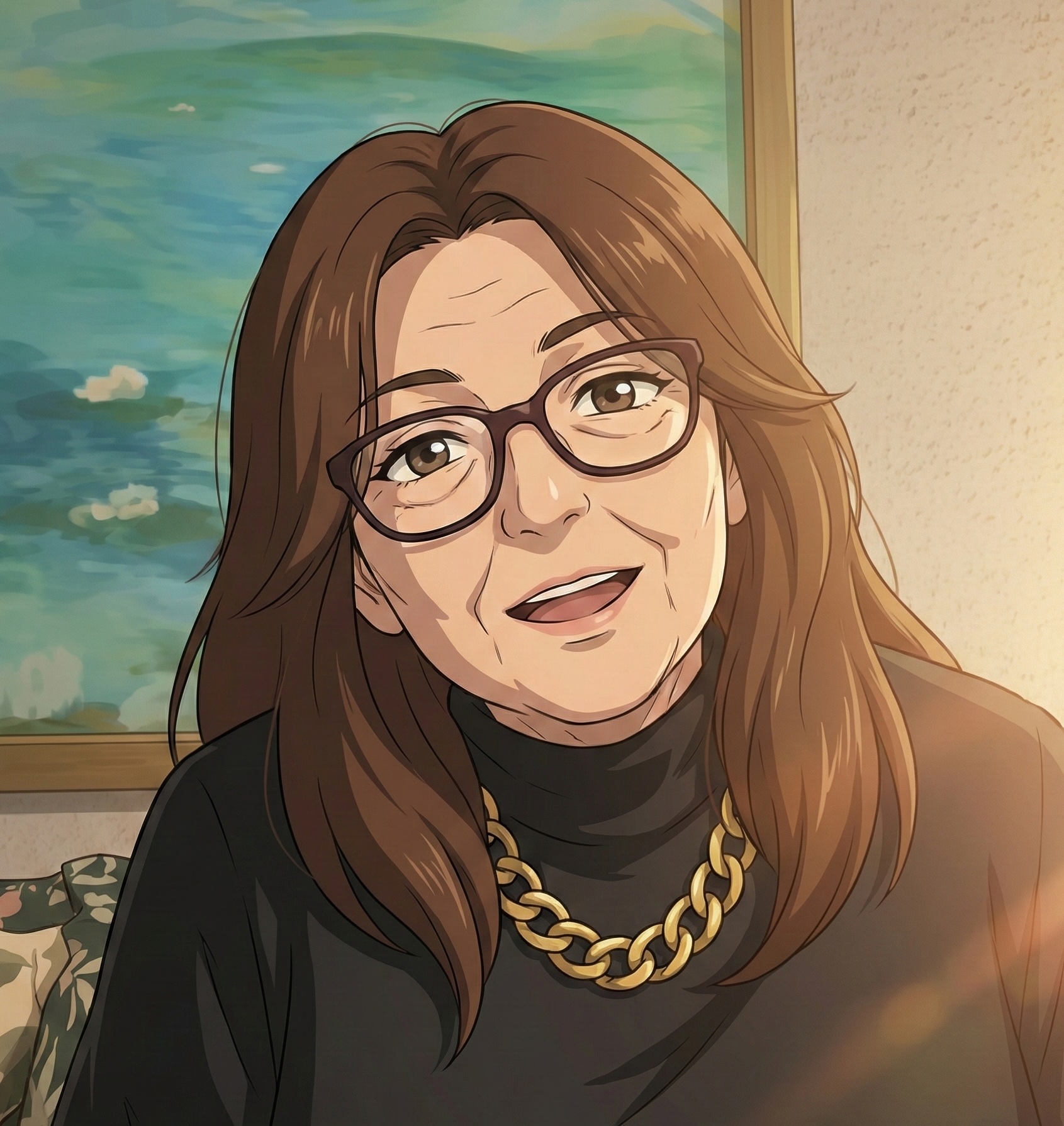
María Magdalena Vázquez
Inducted in 2026
Why it is in the collection
Some channels persuade by their display, others by the lack of it. This one belongs to the second kind. María Magdalena Vázquez is not chasing a wide audience and does not bend her material to the demands of the format: she reads what she has written, in short pieces, with a constancy that itself says something about her relationship to the text she teaches.
It is in the collection for that fidelity to a single work. A Course in Miracles does not lend itself to summary or headline; it asks for repetition, practice and years. A channel that gives up variety in order to return again and again to the same material is respecting the nature of what it transmits, even when that respect costs it reach.
We are also drawn to its angle. Setting the Course alongside the concrete experience of women is an editorial choice rather than an ornament, and it opens a reading that is seldom made explicit. Those seeking scholarship on the text will find other voices in this collection; those seeking someone who inhabits it and shares what she has found inside will find this one.
About this channel
María Magdalena Vázquez introduces herself as both a student and a teacher of A Course in Miracles, and her channel answers precisely to that double standing. A Course in Miracles is a long contemporary spiritual text, arranged as a book of theory, a workbook of daily exercises and a manual for teachers, whose central teaching turns on forgiveness understood as a correction of perception. It is a dense work, written in an idiom of its own, usually read over years and in company. This channel accompanies that reading.
Its content is woven almost entirely around a book of her own, UCDM y la mujer, from which she draws passages in short, consecutive pieces. The form is almost radically plain: no set, no guests, no production, one instalment after another under the same heading. What changes is not the wrapping but the fragment: each video isolates an idea, reads it, and offers it to anyone willing to stop there. The whole works less like a series than like a notebook opened a page at a time.
Visitors should know what they are coming for. This is not an academic introduction to the Course, nor comparative debate, nor historical context on the text and its reception. It is the voice of someone long settled inside that practice, setting it in relation to women's experience, in small repeated doses meant to be taken one at a time rather than in sequence. It is companionable material for those already walking that road, or for the curious who would rather enter through the door of experience than the door of study.