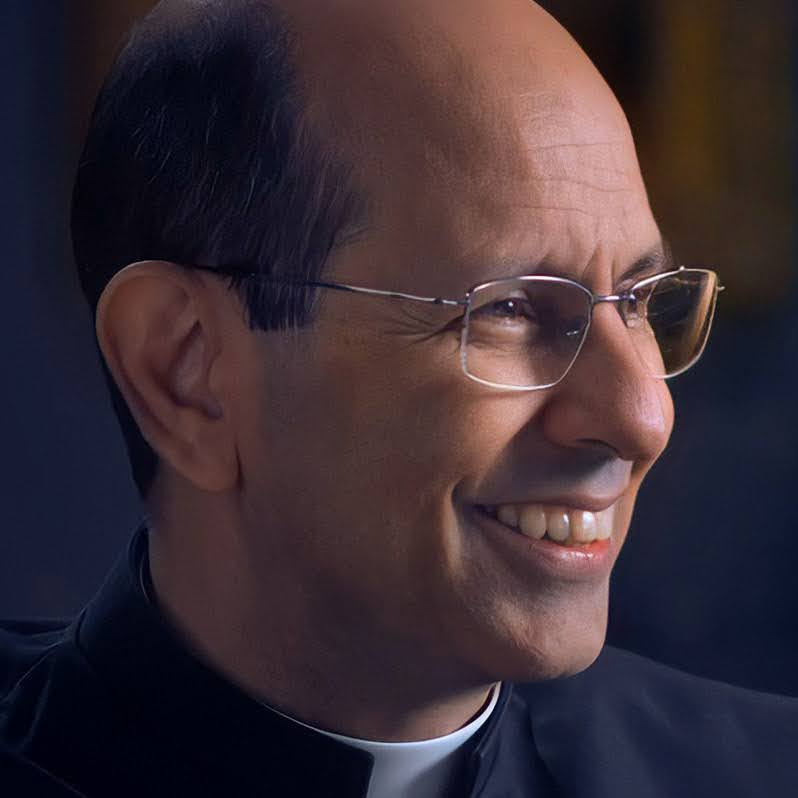
Padre Paulo Ricardo
Inducted in 2026
Why it is in the collection
Daily constancy is a criterion that matters to us, and here it is the defining trait. Publishing a homily every morning, tied to that date's readings, with the rosary alongside it, demands a discipline that no algorithm particularly rewards. It is work done in a spirit of service, the way it is done in a parish.
We selected this channel for the clarity of its teaching. The pieces are short and carry one idea each, set out without ornament and without dilution to please. He speaks from a declared position within the Catholic tradition, and we prefer that transparency to feigned neutrality: the listener knows exactly where the words are coming from.
This is not a channel seeking to convince outsiders, nor does it claim to be. Its audience already prays. But the quality of the exposition, the use of saints' lives as argument rather than decoration, and the complete absence of spectacle make it worth attention even for someone who comes only to observe how a living tradition teaches itself.
About this channel
Father Paulo Ricardo's channel follows the Catholic liturgical calendar much as a parish would. Each day it publishes the homily for that day's readings, and each day it offers the rosary prayed together. That regularity ( one instalment a day, tied to a specific date ) defines the body of work better than any thematic description could.
The homilies do more than gloss the day's gospel. Each takes a point of doctrine or of spiritual life and develops it briefly and firmly: humility as the condition of any inner progress, the need for intimacy with God if one is not to sink, the law of love within Christian morality, the Ignatian method for changing one's life. The memorials of saints give rise to concrete portraits ( the Curé of Ars, Saint Alphonsus Liguori, Saint Ignatius ) offered as examples rather than as anecdotes. Sunday homilies occasionally take issue with familiar readings of a well-known passage, and the odd video turns to practical matters of ordinary life, such as telling a passing crisis from a problem that needs help.
What a newcomer finds is a voice teaching from within the Catholic tradition, unambiguous about where it stands and not courting the approval of those who stand elsewhere. The format is plain: one person speaking to camera, the biblical text as starting point, and a contained running time. The material is in Portuguese. Its value lies less in any single piece than in the habit it proposes: a short teaching each day, sustained across years, available to anyone who wants to follow the liturgical year from wherever they are.